
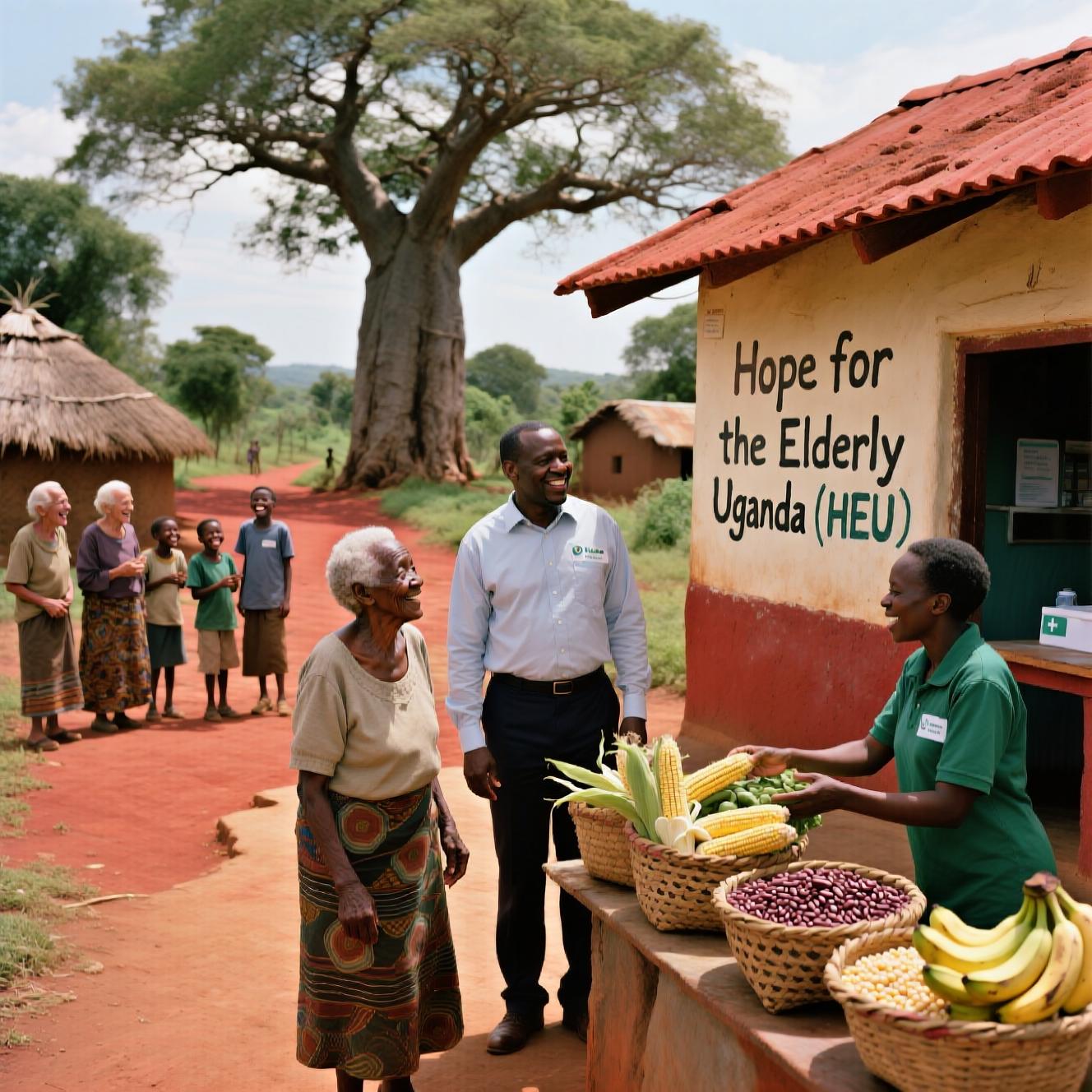
Hope for the Elderly Uganda-HEU is a community-based organization headquartered in Amukurat Village, Kadie Parish, Otuboi Sub-county, Kalaki District, in the Eastern Region of Uganda. Founded by Ms. Ikaka Irene and Mr. Elubu Joseph, the organization was established out of a deep concern for the welfare and dignity of elderly persons aged 65 years and above, many of whom face neglect, poverty, poor health, and social isolation.
In many rural communities in Uganda, the elderly remain among the most vulnerable groups — often lacking access to adequate healthcare, nutrition, safe shelter, and emotional support alongside numerous dependants. Traditional family care structures are gradually weakening due to economic pressures, urban migration, and changing social values, leaving many older persons without consistent care.
Hope for the Elderly Uganda exists to respond to these pressing needs by providing compassionate care, promoting community solidarity, and advocating for the rights and inclusion of elderly persons. The organization works to ensure that senior citizens in our communities live their later years with dignity, love, and purpose through targeted programs in healthcare support, nutrition, skills empowerment, and social engagement.
2. Vision, Mission & Motto
Vision: A Uganda where every elderly person lives with dignity, purpose, and joy.
Mission: To promote the well-being, inclusion, and rights of elderly persons through care, advocacy, and community support.
Motto: Caring Hands, Golden Hearts.
3. Core Values
- Compassion – Acting with empathy and care in all our engagements.
- Integrity – Maintaining transparency, accountability, and honesty.
- Respect for Human Dignity – Valuing each person regardless of age, status, or background.
- Community Participation – Working hand-in-hand with communities for sustainable impact.
- Empowerment – Enabling beneficiaries to take control of their lives and futures..
- Sustainability – Creating lasting impact through long-term solutions.
4. Objectives
- To promote community awareness and participation in elderly welfare.
- To provide accessible healthcare and essential support to elderly persons.
- To improve the living conditions of the elderly through shelter construction, renovation, and provision of basic needs.
- To empower caretakers with skills and resources for sustainable livelihoods.
- To strengthen community support systems for the welfare of the elderly.
- To advocate for the rights and inclusion of the elderly in development initiatives.
5. Core Program Areas & Key Activities
A. Direct Care & Support
- Home visits and companionship
- Nutritional support through monthly food baskets and hot meal events
- Medical outreach camps and referrals
- Provision of assistive devices (walking sticks, wheelchairs, reading glasses)
- Distribution of hygiene items (soap, bedding, mosquito nets, adult diapers)
- Construction and renovation of shelters for the elderly and other vulnerable groups.
- Providing support to dependents of the elderly, ensuring their well-being and security.
- Shelter Improvement. We construct or renovate shelters for elderly persons living in unsafe or dilapidated housing. This provides them with safe, secure, and dignified living spaces.
- Support to Dependents. Many elderly persons are caretakers of grandchildren or other dependents. We provide targeted support to these dependents, ensuring that households remain stable and secure
B. Skills, Empowerment & Income Support
- Offering practical skills training on income-generating activities to promote self-reliance.
- Supporting small-scale projects that boost household income eg. poultry, goats, vegetables
- Elderly savings and loan groups
- Intergenerational mentorship programs with youth
- Empowering Caretakers; Capacity-building programs for caretakers of the elderly to improve quality of care. Providing tools, knowledge, and resources to strengthen caregiving practices.
C. Advocacy & Awareness
- Public campaigns on elderly rights via radio and community events
- Engagement with policymakers for improved elderly services
- Training caregivers in elderly care best practices
D. Social & Emotional Well-being
- Elderly social clubs with games, music, storytelling
- Annual celebration of the International Day of Older Persons (1st October)
- Counseling and spiritual support
- Our Approach
- We believe in a hands-on, community-based approach that combines immediate relief with long-term sustainability. By addressing both the physical and economic needs of our beneficiaries, we create pathways to improved health, resilience, and self-sufficiency.
6. Target Beneficiaries
- Elderly persons in vulnerable conditions.
- Caretakers of elderly persons.
- Dependents under the care of elderly persons.
- Communities with limited access to elderly care services.8. Expected Impact
- Through our interventions, elderly persons will enjoy better health, secure shelter, and a restored sense of dignity. Caretakers will gain economic independence, and communities will be more inclusive, resilient, and compassionate towards older persons.
7. Expected Impact
Through our interventions, elderly persons will enjoy better health, secure shelter, and a restored sense of dignity. Caretakers will gain economic independence, and communities will be more inclusive, resilient, and compassionate towards older persons.
8. Legal Status
Hope for the Elderly Uganda is in the process of registering as a CBO in accordance with the laws of Uganda, enabling it to operate legally and engage in partnerships with donors, government agencies, and other stakeholders.
9. Contact Information
Address: Amukurat Village, Kadie Parish, Otuboi subcounty, Kalaki District, Uganda
Website: www.eldershope.org
Email:info@eldershope.orgn
Phone: +256 784 990 303